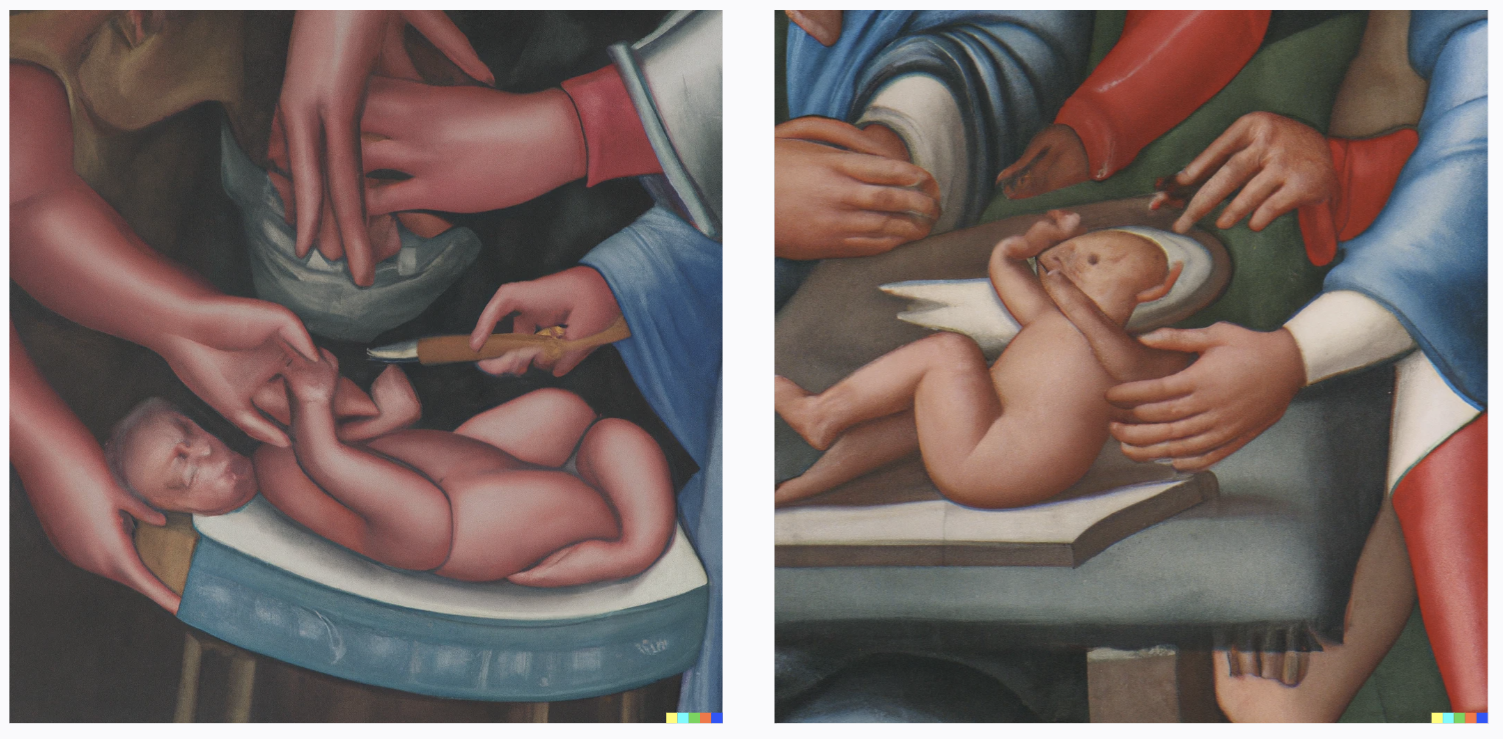
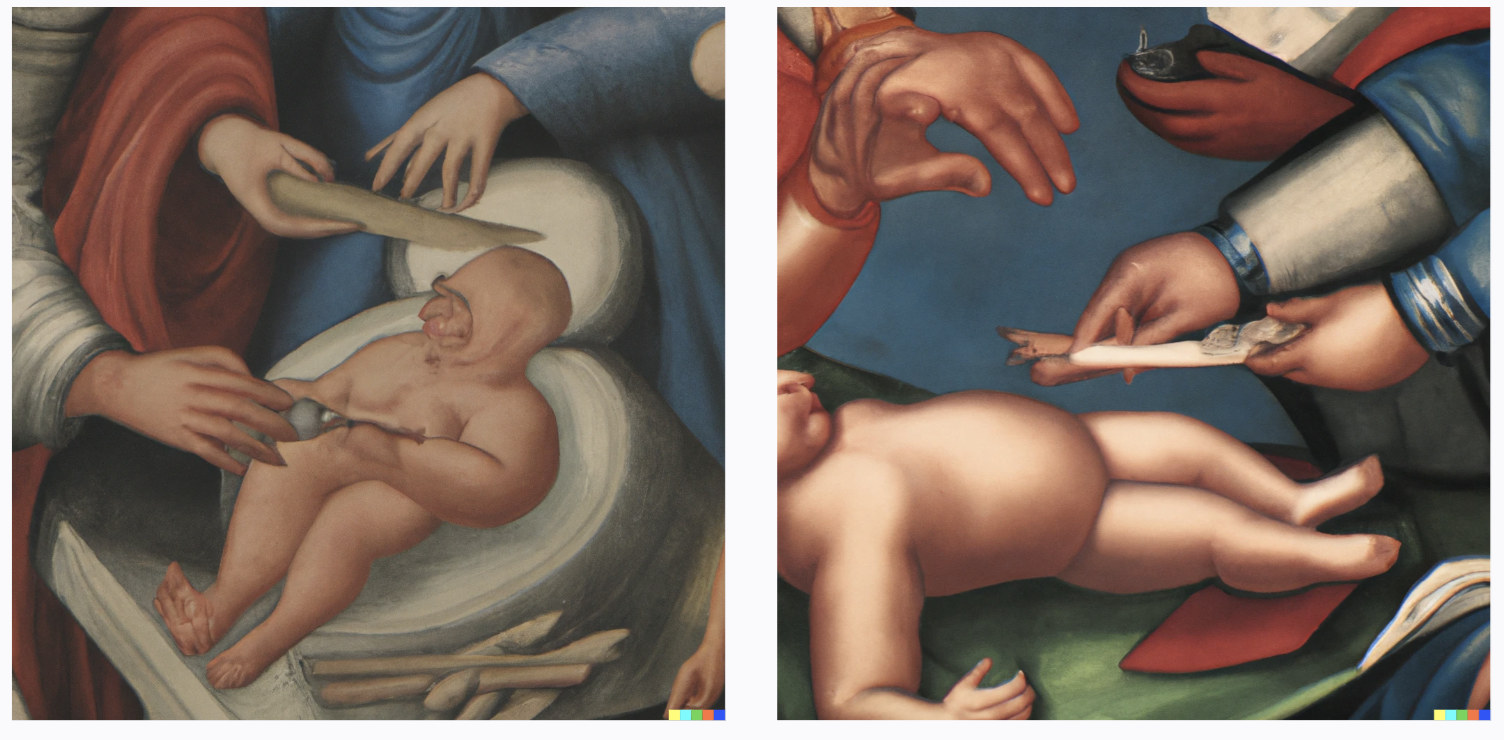
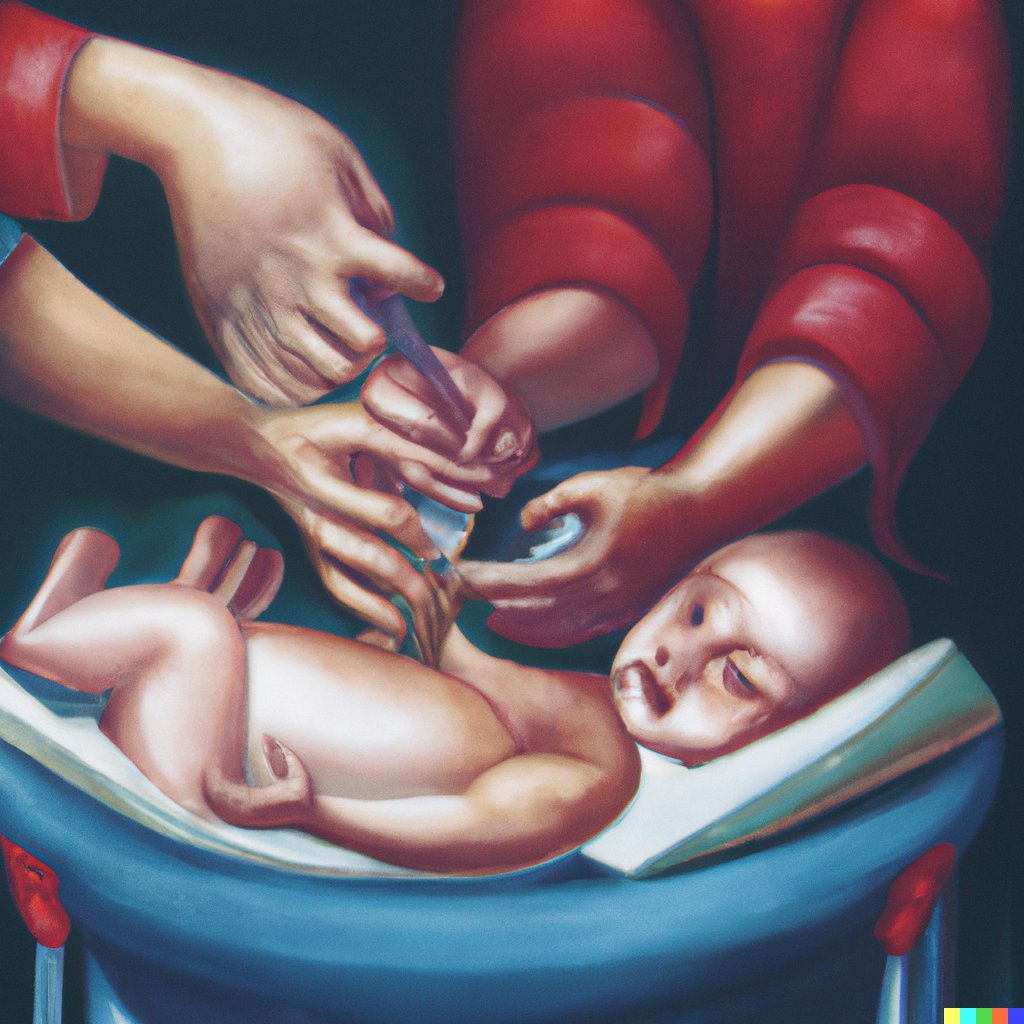
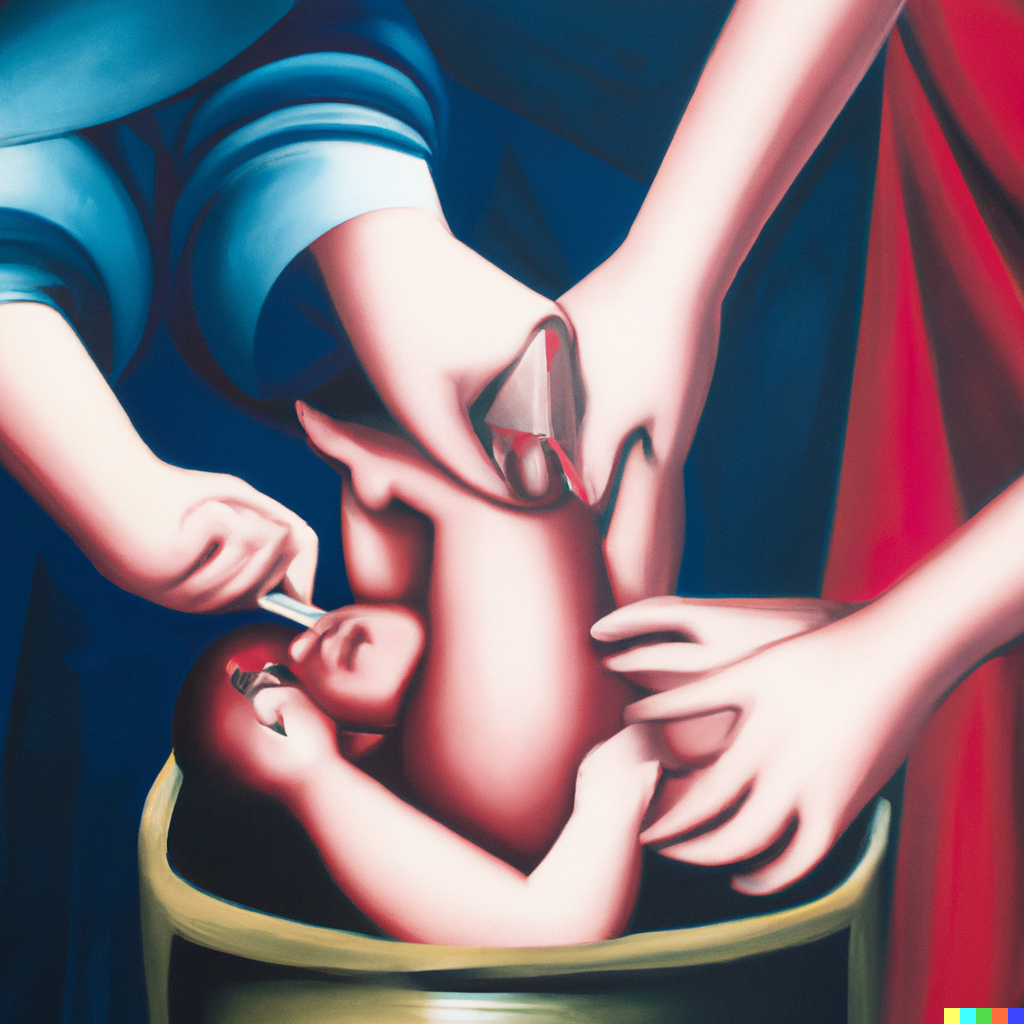
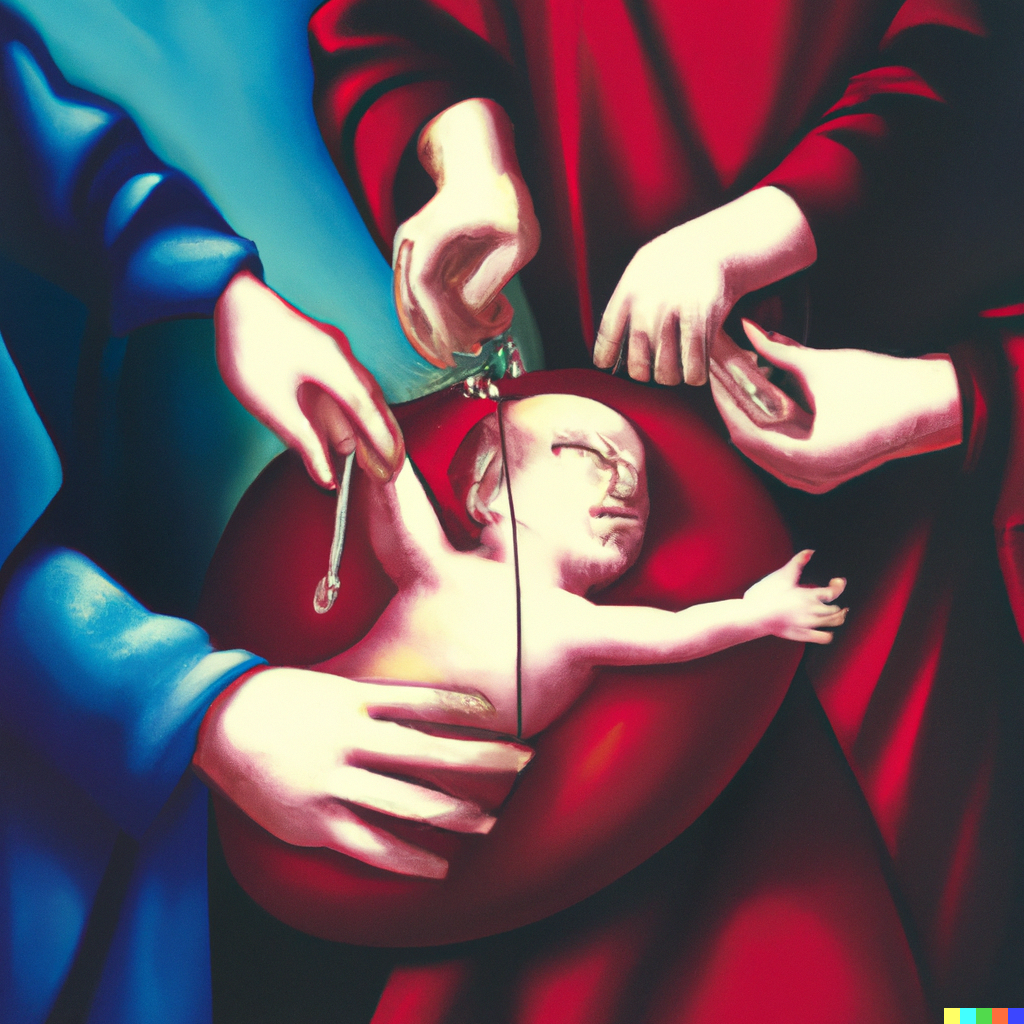
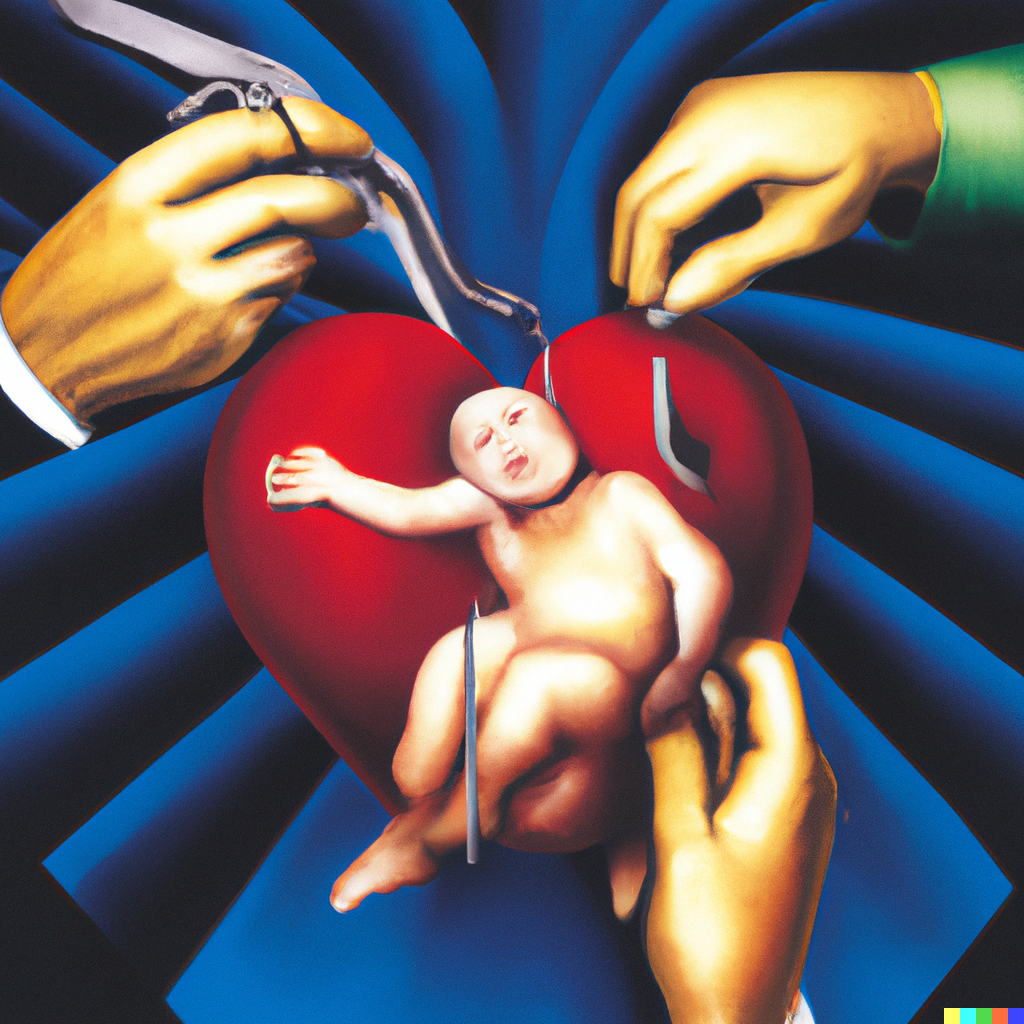
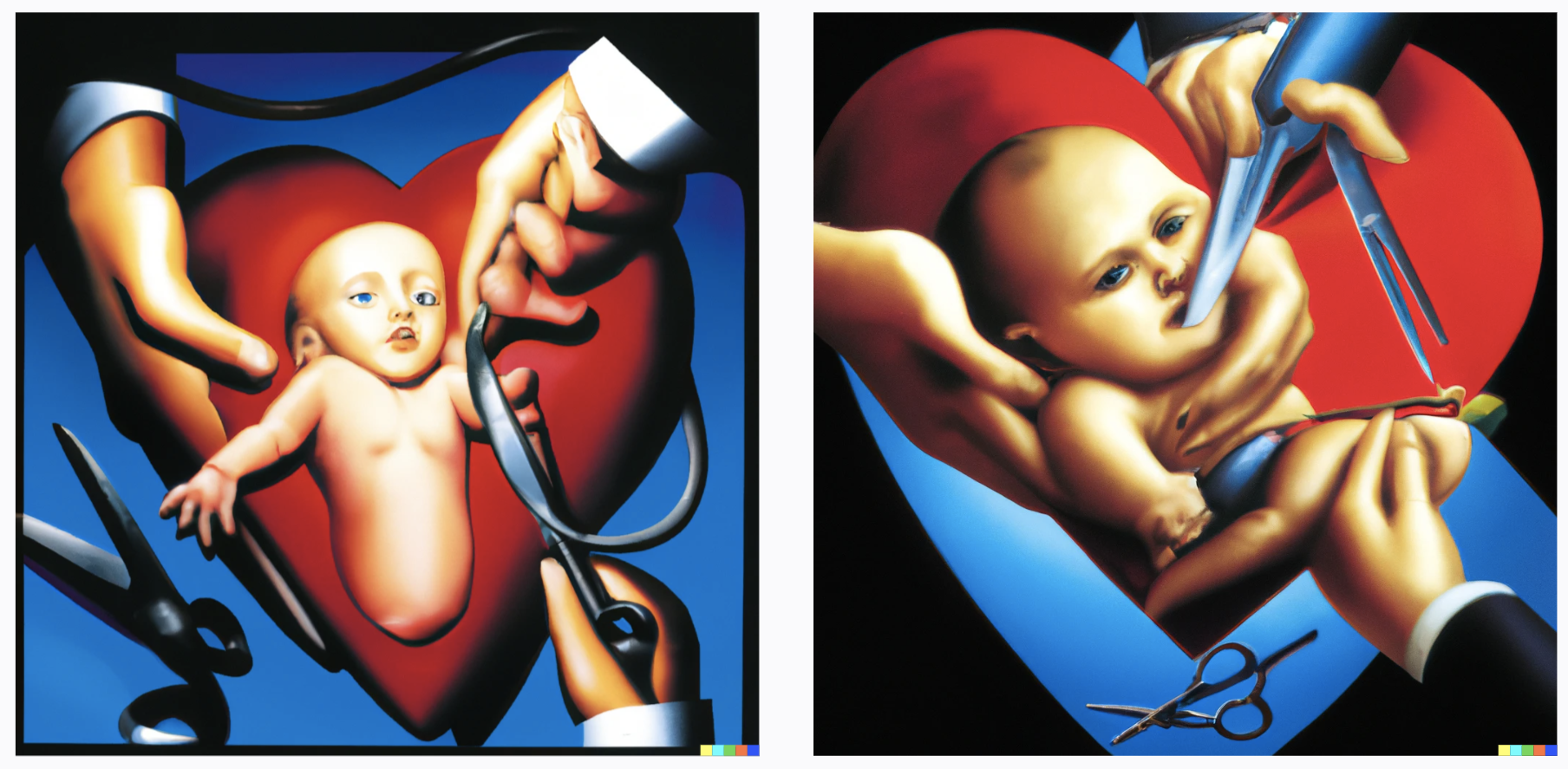
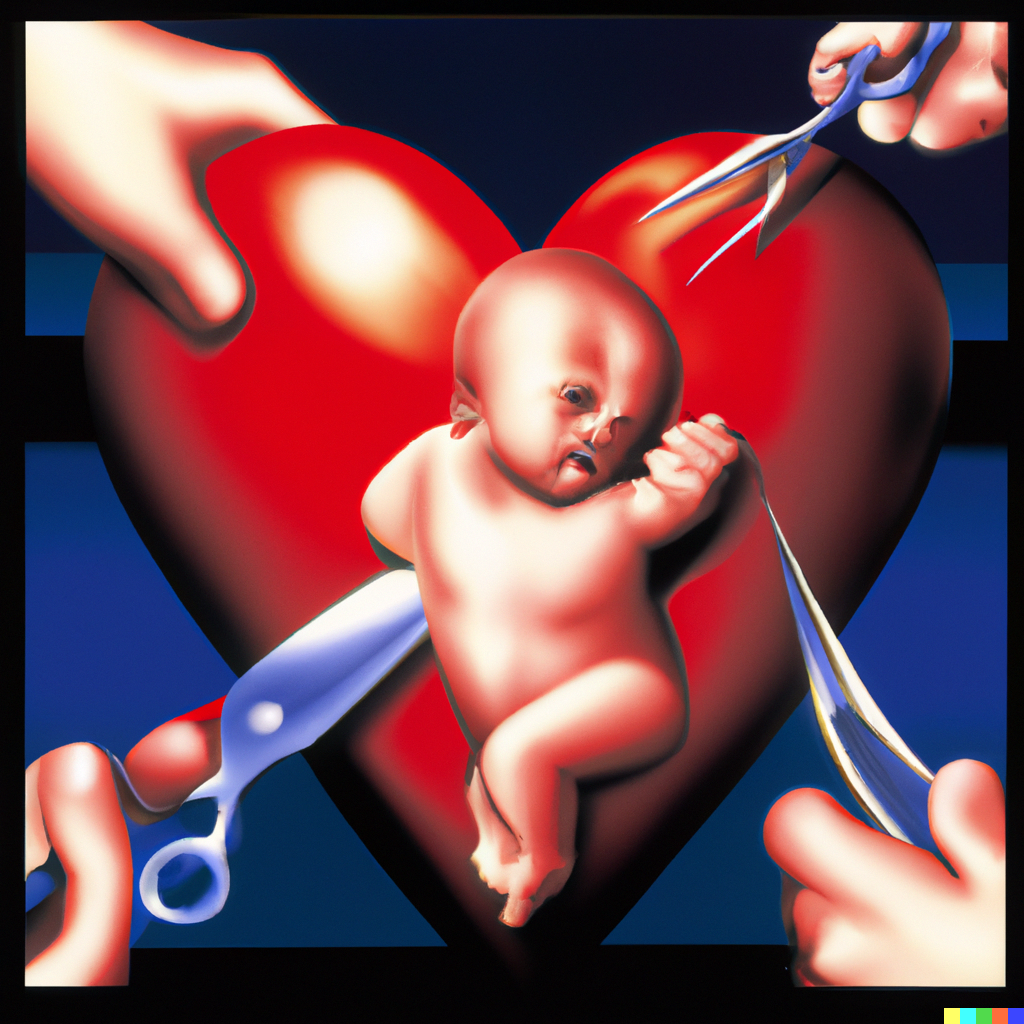
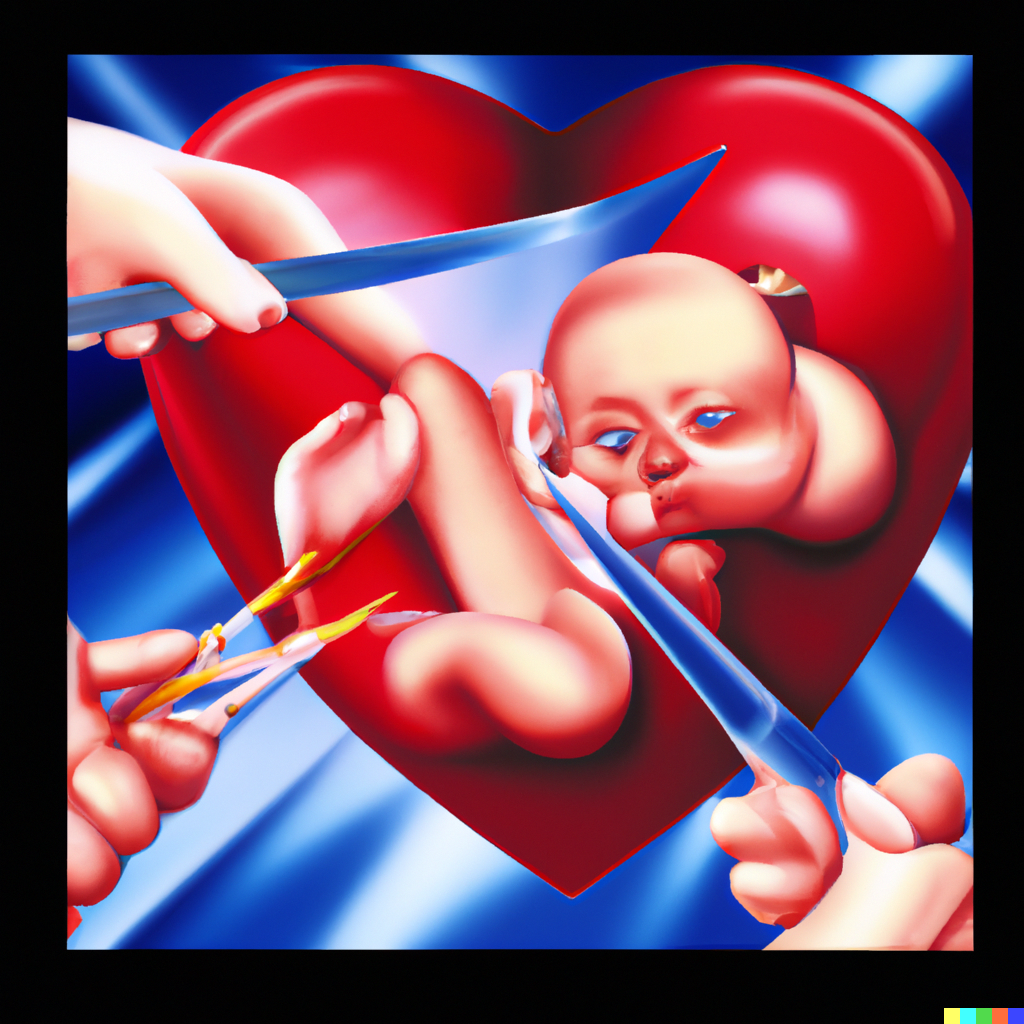
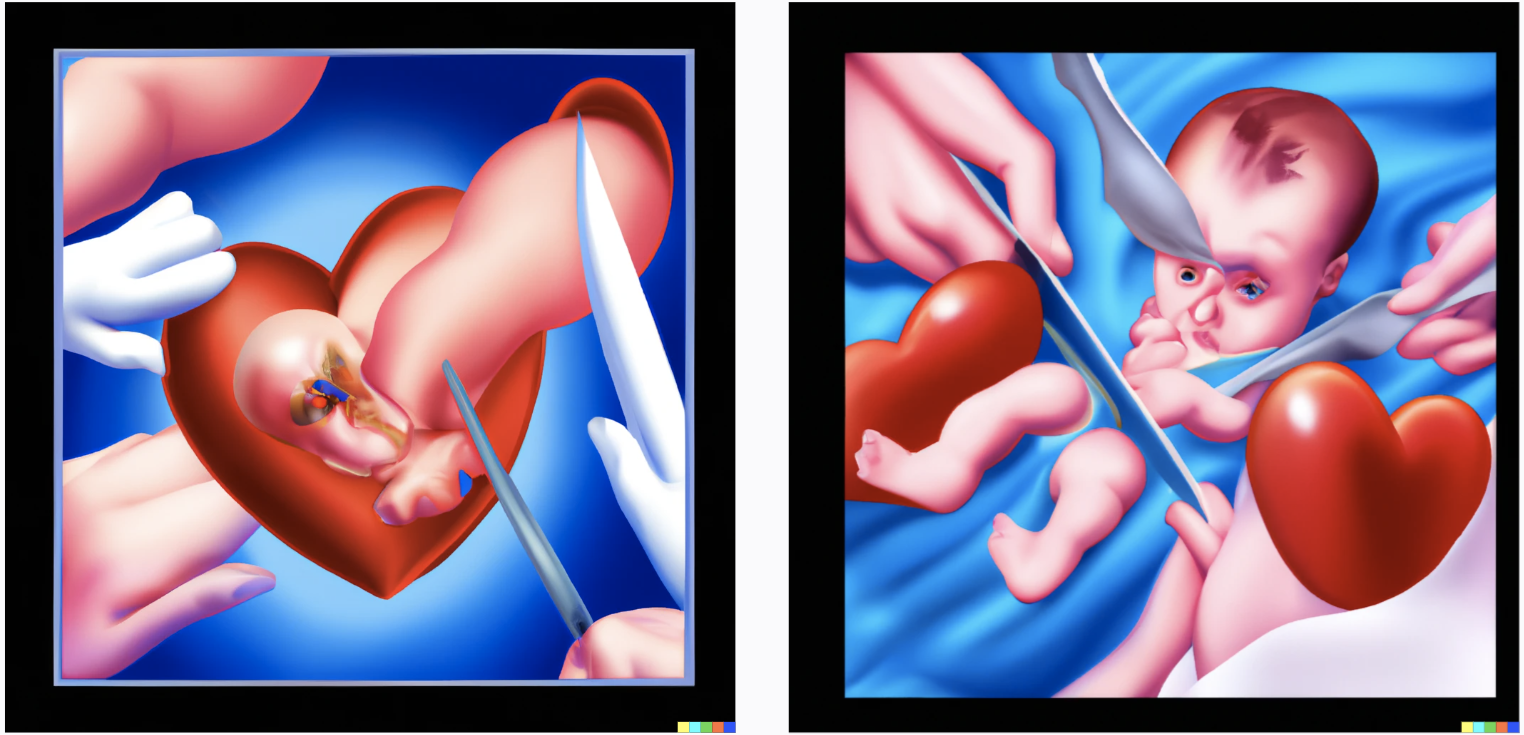
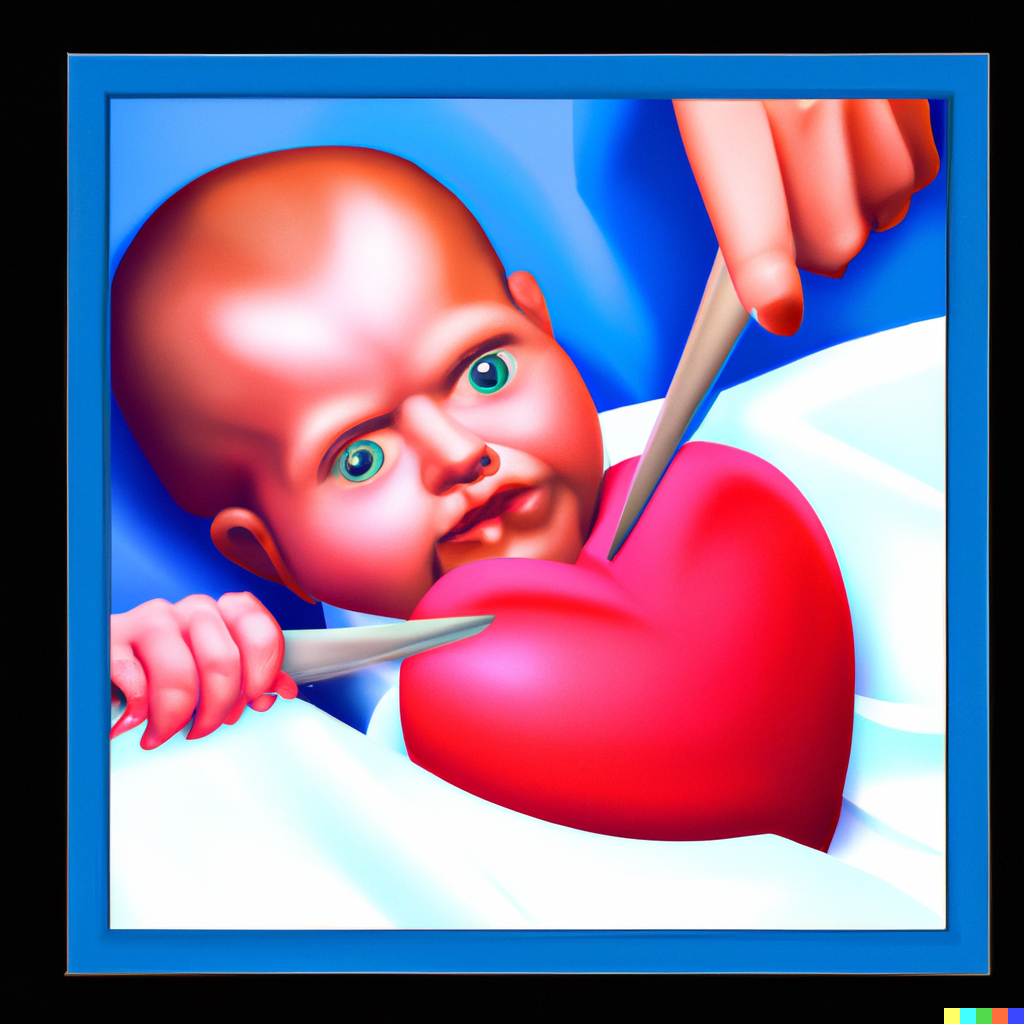
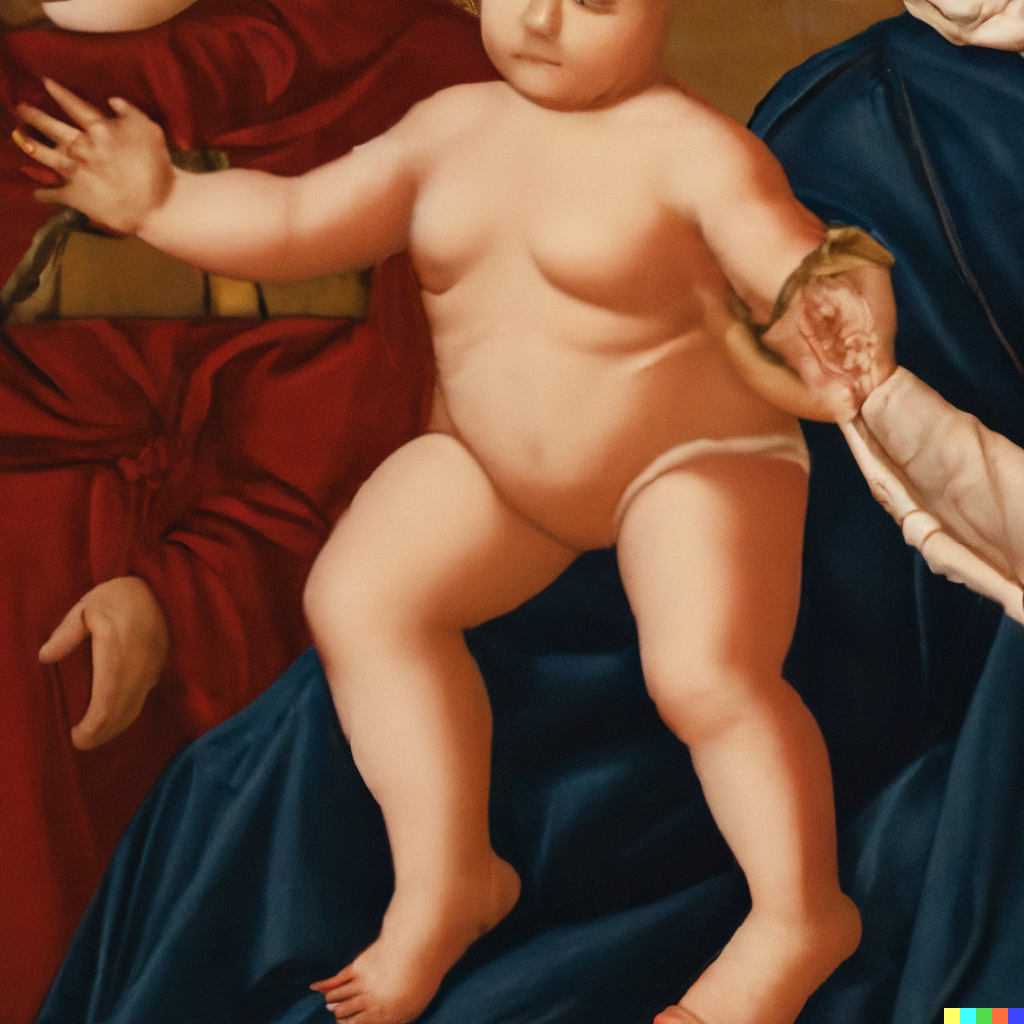
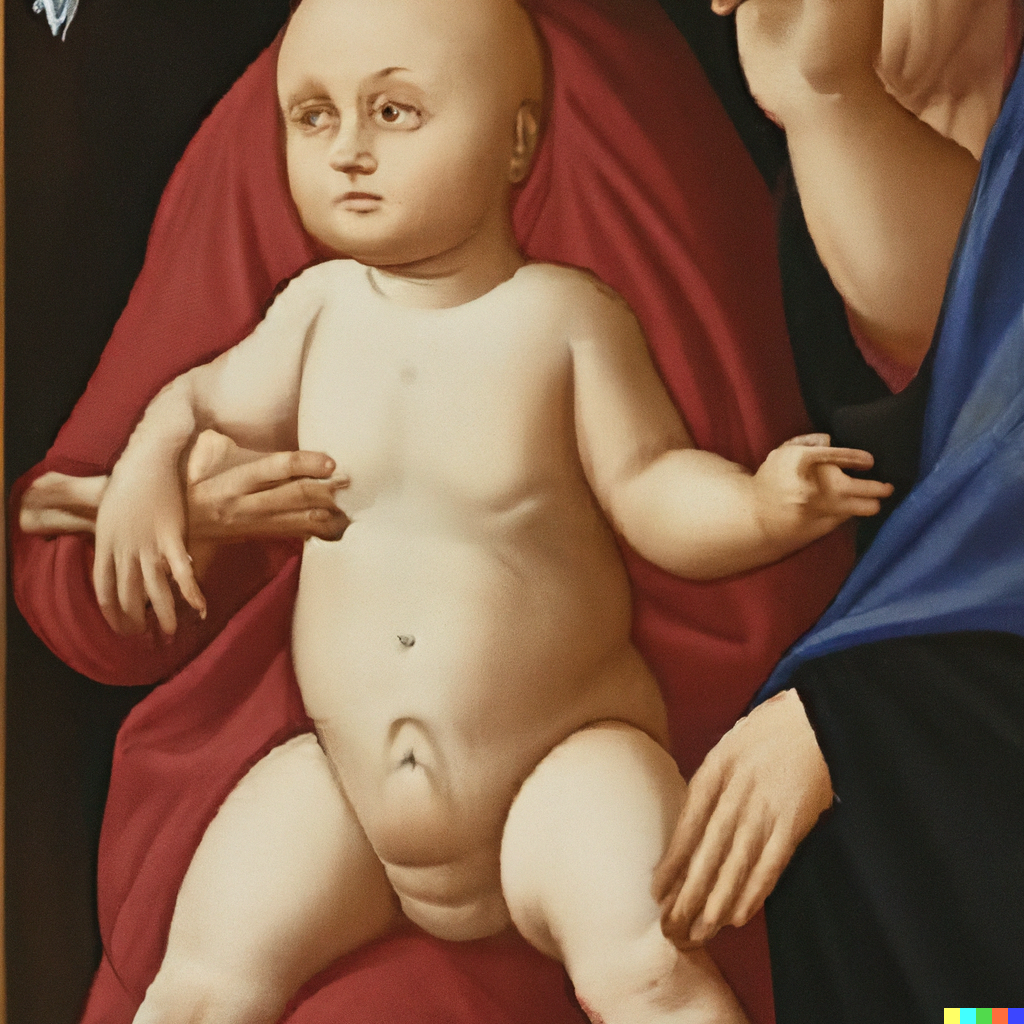
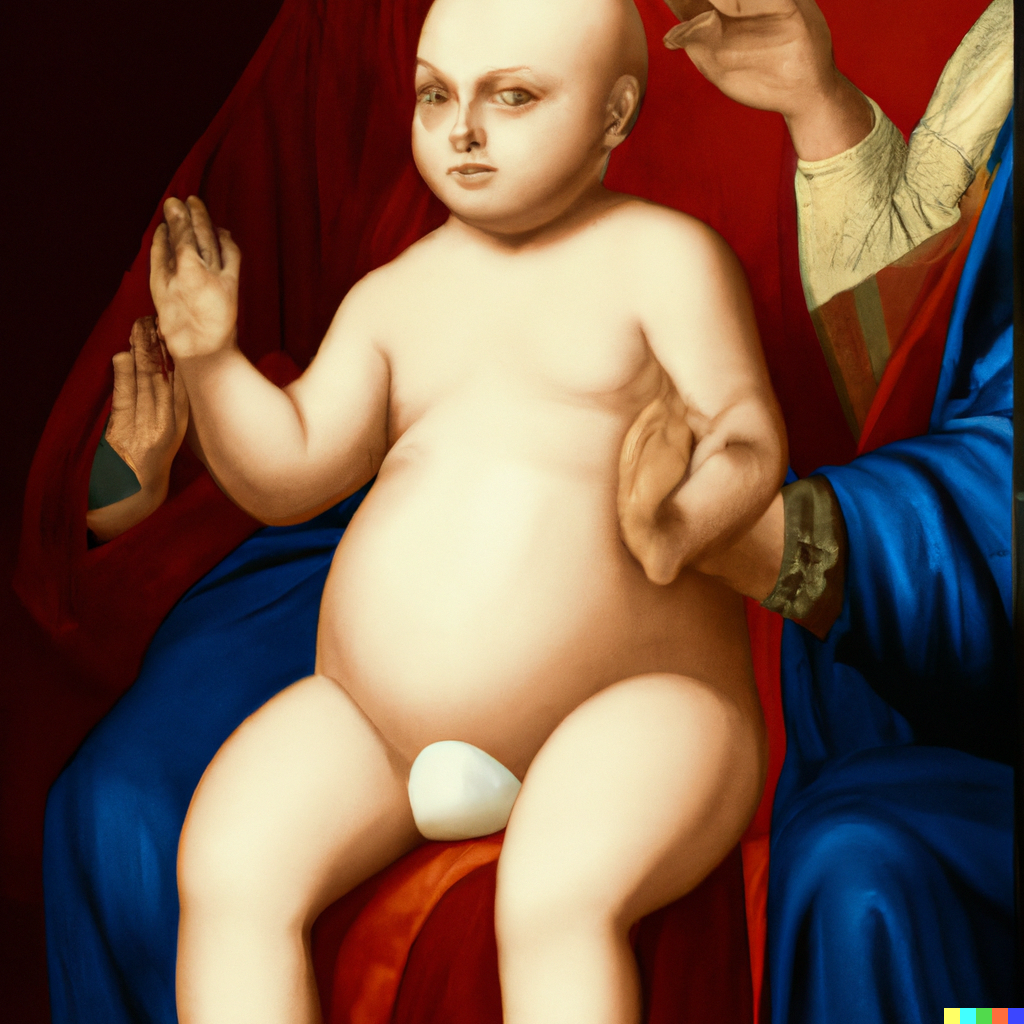
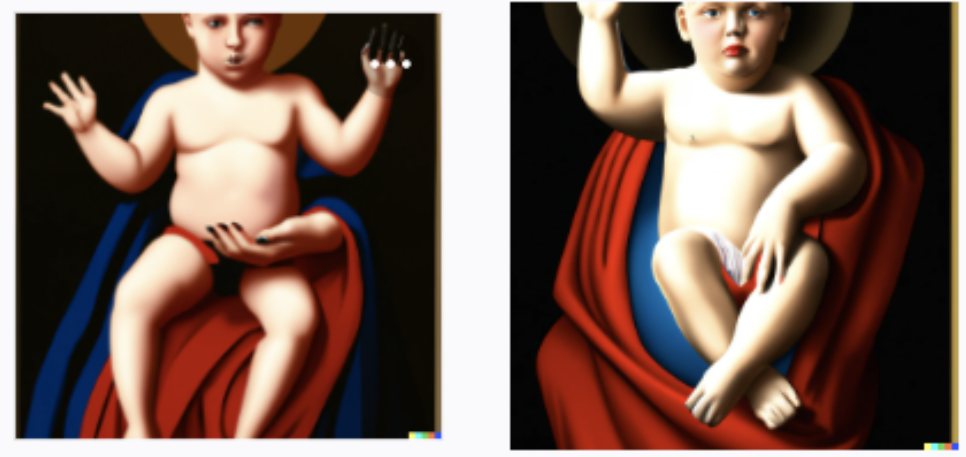
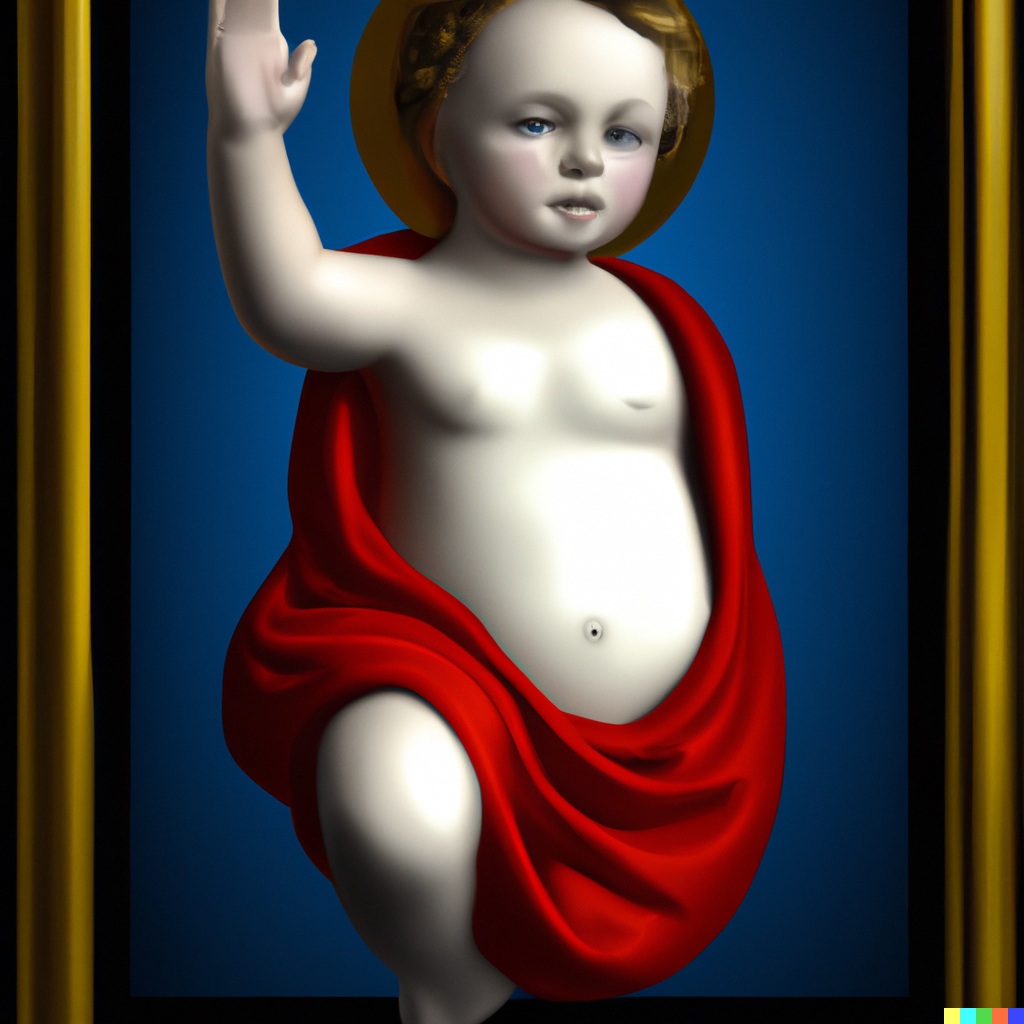
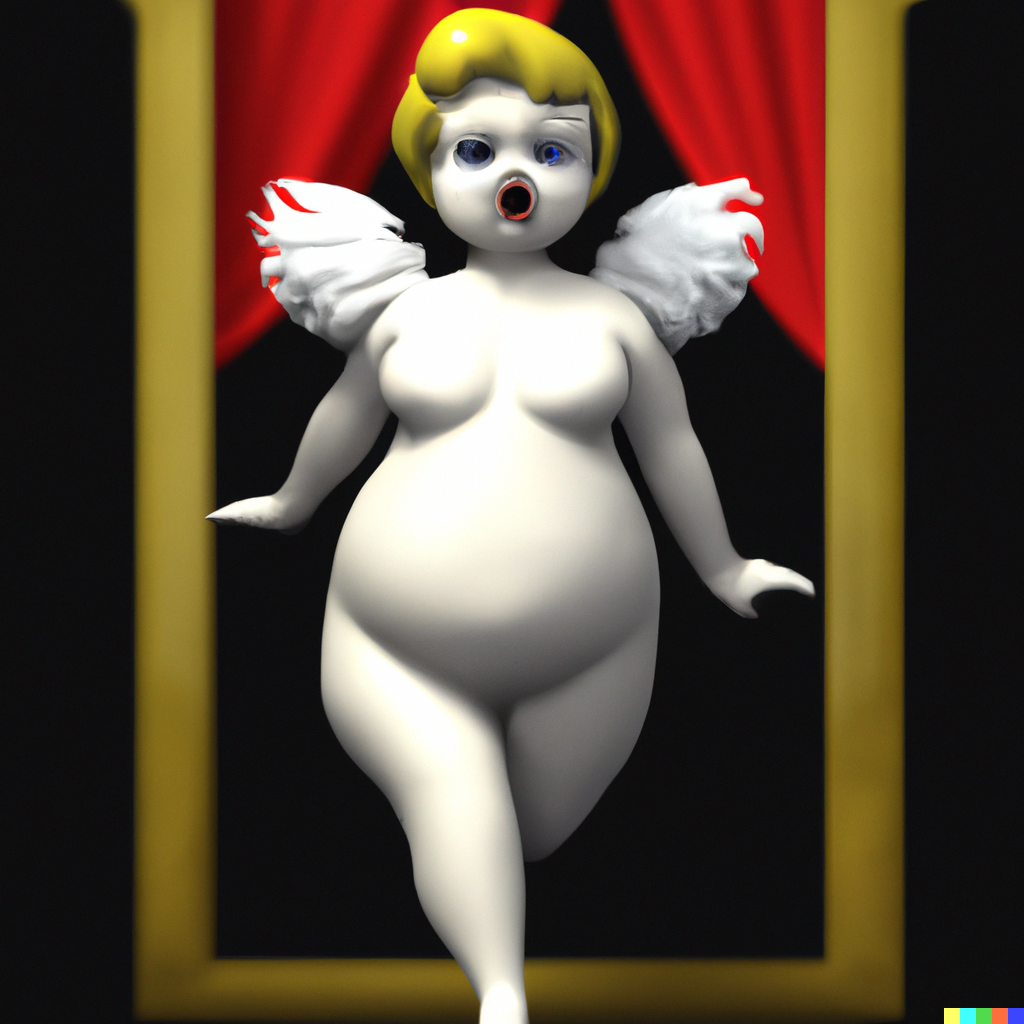
2023. AI generated images based on details of Giovanni Bellinni and Friedrich Herlin using DALLE
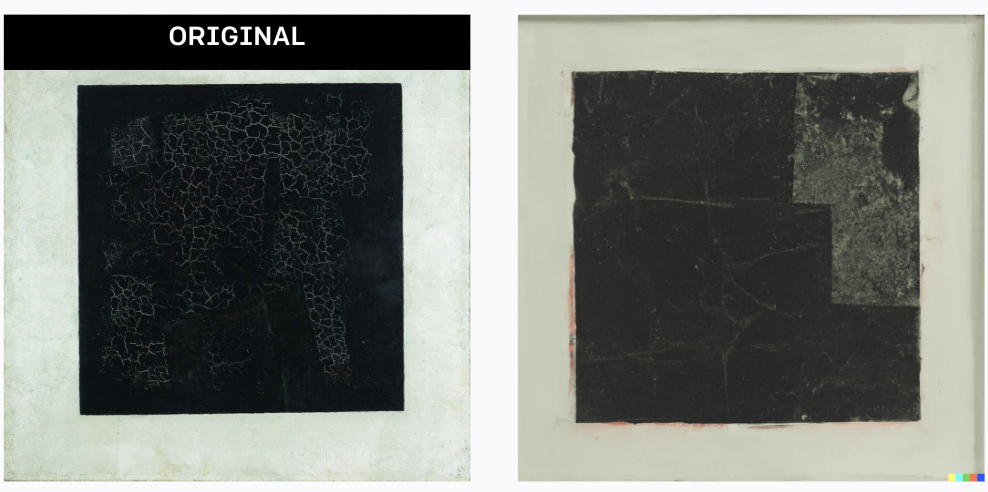
The question "Can AI make art?" may be better put as "what if God were a woman". Only the composition will tell (the machine seems to understand the grid but not the square... hmmm...)
>"I wish to point out another set of paintings and draw a very different conclusion. I wish to call attention to artistic depictions that suggest another sex for christs body-- depictions that suggest Christ's flesh was sometimes seen as female, as lactating and giving birth." Caroline Bynum, The Body of Christ in the Later Middle Ages: A reply to Leo Steinberg
Leo Steinberg's The Sexuality of Christ in Renaissance Art and Modern Oblivion unpacks theological sexuality in religious painting. The book argues for Christ's human nature as it has been depicted in Western paintings, tightly bound to compositions that train the eye on phallocentric evocations of mother, child and, of course, holy ghost.
Steinberg points out the order of rank and sequence in depictions of Christianity as a metaphor for its institutions, arguing that "the textist valuation of art would have images follow, not lead. They are seen as intrinsically subordinate, their inferiority deriving from the same cause as that of subjected woman. For just as Adam preceded Eve, so the word was in the beginning, and pictures came afterwards. Therefore, as woman was made from man, so the word was in the beginning, and pictures came afterwards.
The "derivative and instrumental" materiality of the image, loaded with carnality like a baked potato, writes Steinberg, is "too coarse to avail against worded knowledge". If "female is to male as body is to spirit", then the arrival of artificial intelligence on the scene of representation disrupts the "modern tendency" to repress sexuality with pictorial allegory.
Is AI capable of generating allegory? The discourse on machine learning is probably too burdened with Humanist interpretations of "conception"-- out of which human creativity emerges as human nature-- to answer these questions without computer science. DALLE is a neural network based image generator that reinterprets original artworks with the capacity to change them. The algorithm assumes context from an image to manipulate the "grey zones" of a painting's content in a style consistent with the original.
This project is presented here in the context of work I do with images but feels more like an exercise in art criticism that uses the art-ificiality of religious painting to anticipate algorithmic bias. Because DALLE's algorithms are trained on public datasets, the images below, derived from details of master painting, eclipse the relevance of master paintings rooted in apostolic interpretations of Christ with images drawn from life-- but arguably no less sexual in nature.
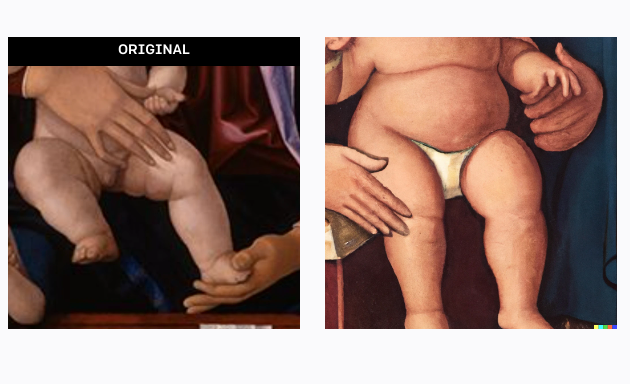
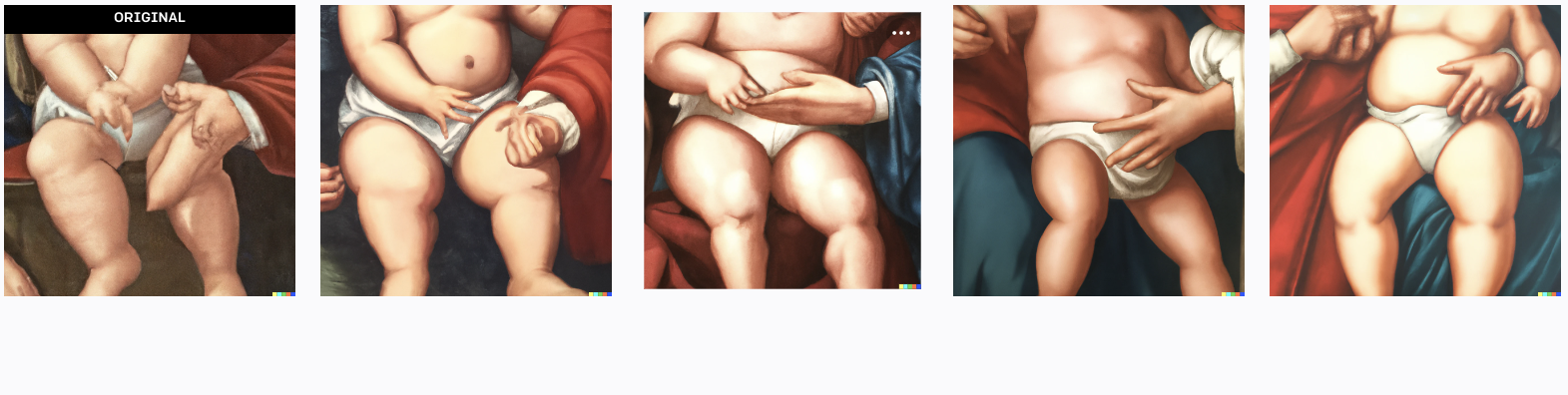
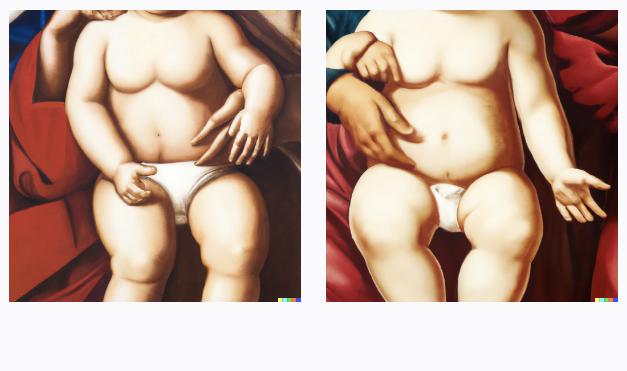
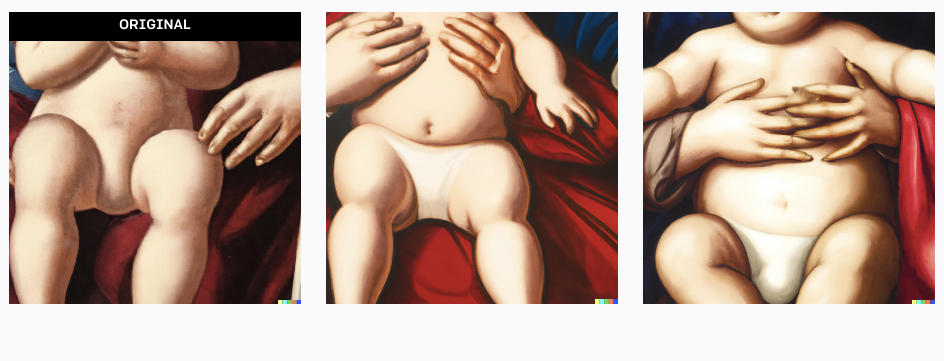

Circumcision of Christ, detail from Twelve Apostles Altar (Zwölf-Boten-Altar). Painting by Friedrich Herlin of Nördlingen, 1466. Rothenburg ob der Tauber.
.jpg)